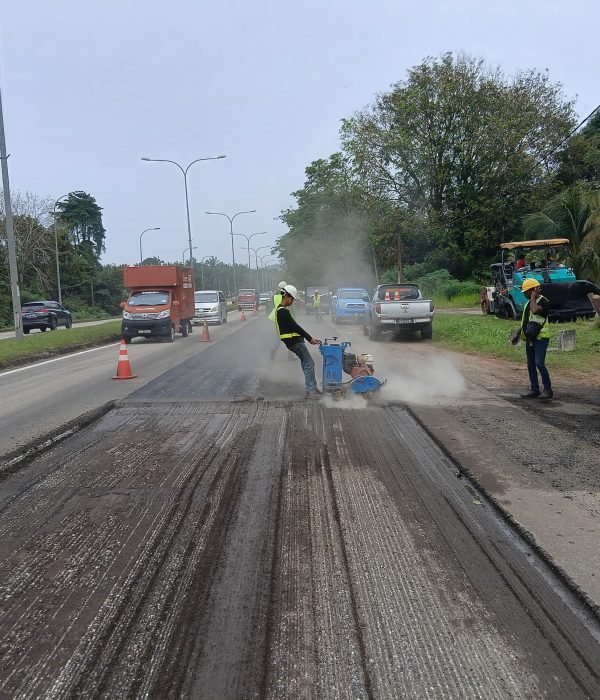
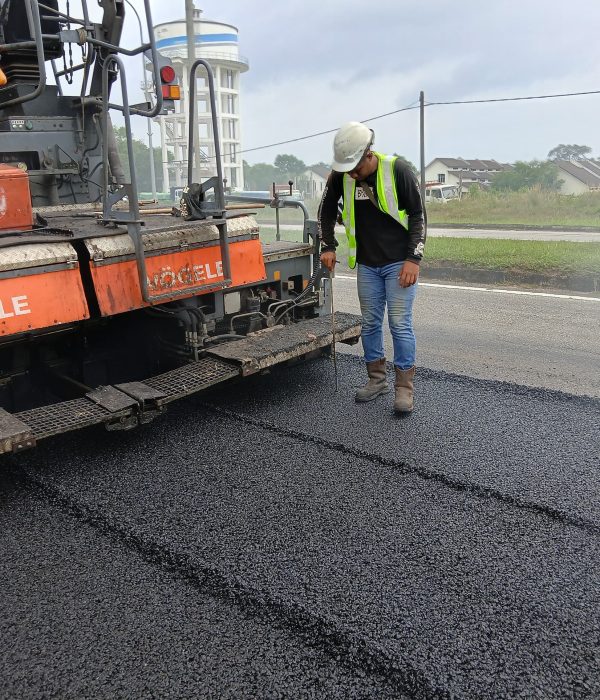
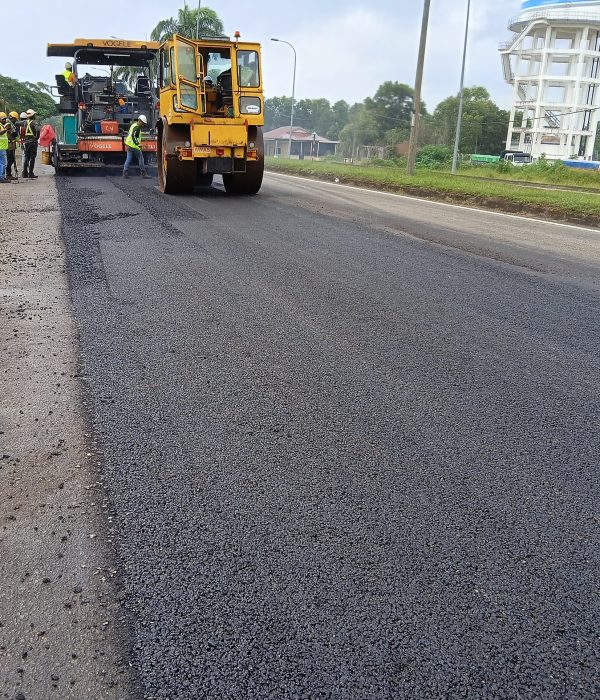
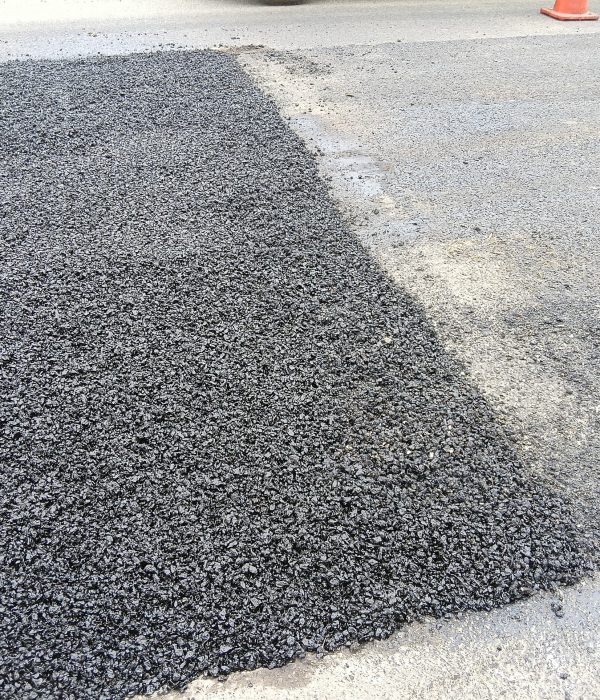
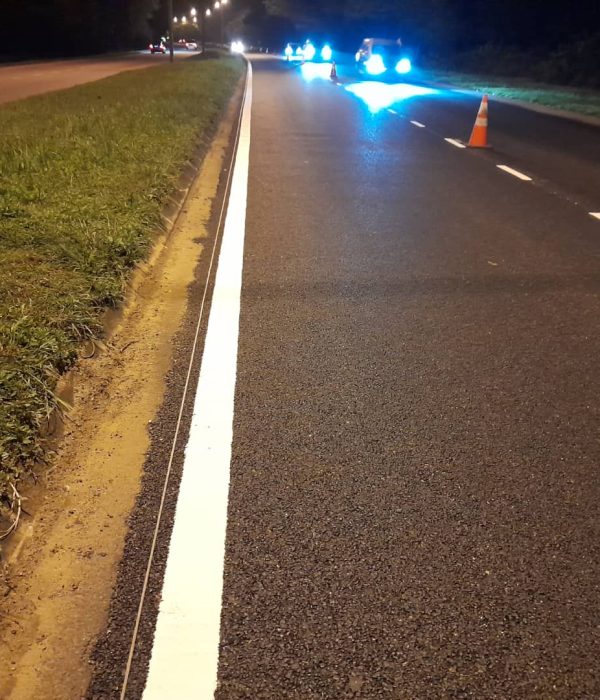
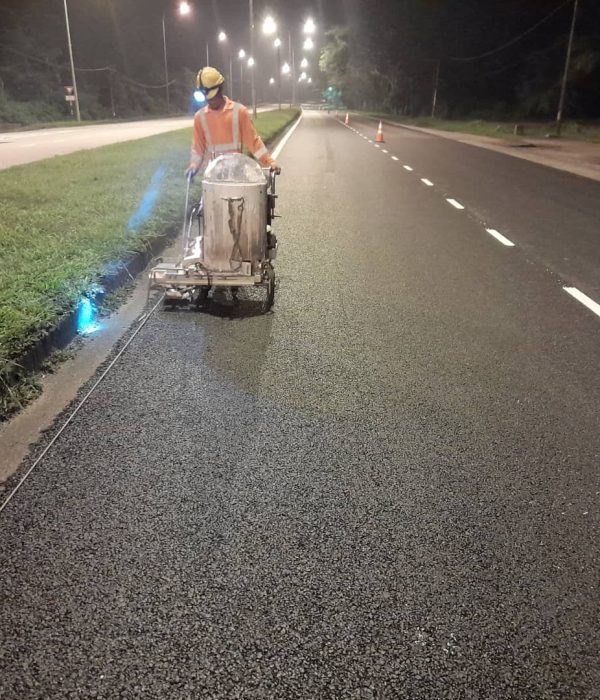
Crumb Rubber Modified Bitumen (CRMB) is a resilient modified bitumen that blends recycled used-tyre rubber powder with high-grade bitumen. When incorporated with aggregate, it produces Crumb Rubber Modified Asphalt (CRMA), a pavement material that has been laid across Malaysia since 2019, covering over 350,000 m3 of the Federal Road network. Each ton of CRMA removes end-of-life tyres from landfills and ensures decades of durable road that complies with JKR Malaysia JKR/SPJ/2008-S4 Standard Specification for Roadworks.
ENVIRONMENTAL IMPACT
Closing the Loop on Malaysia's Waste Tyres
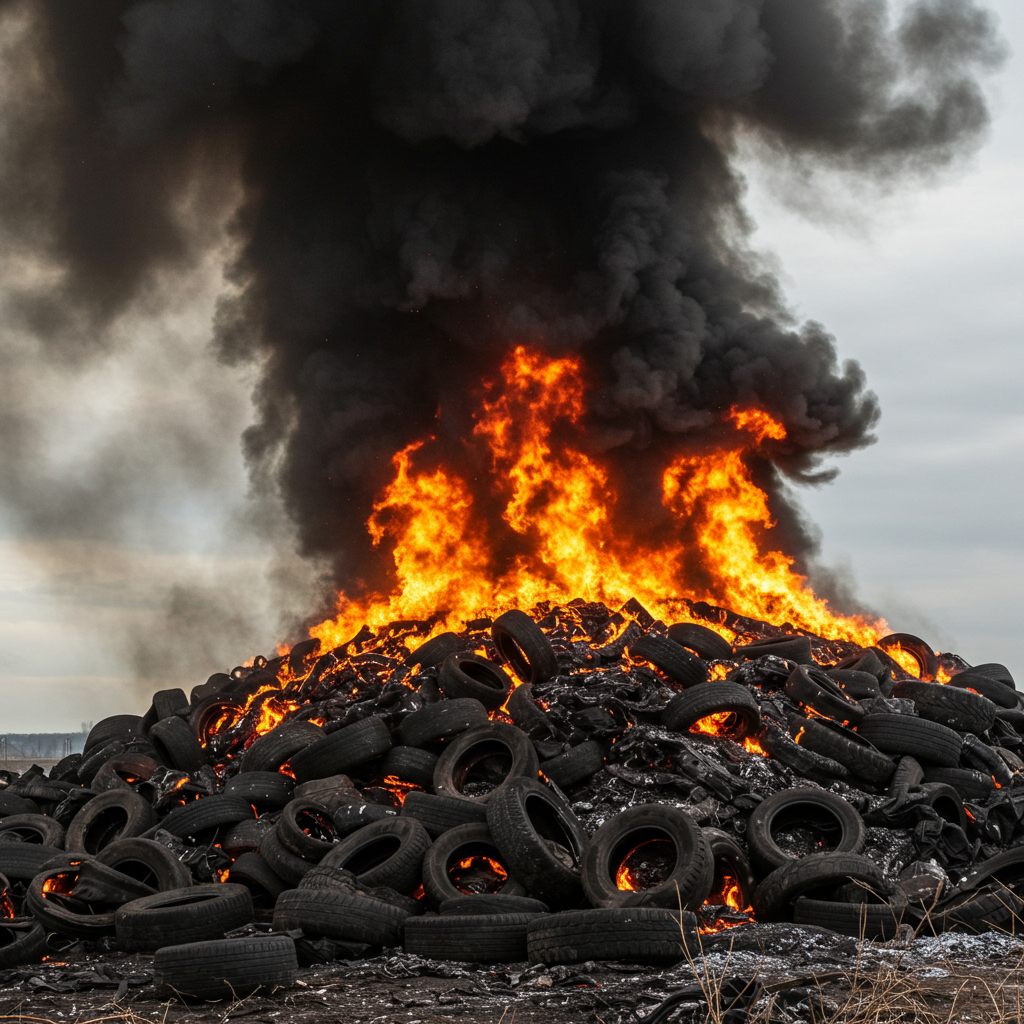
The growing tyre waste problem poses significant environmental risks, including chemical leaching, public health threats (mosquito breeding), fire hazards, and rapid landfill exhaustion. In Malaysia, waste tyre generation rises by about 5% annually, with 60% of used tyres disposed of improperly. If left unchecked, the nation will face severe pollution issues.
• Malaysia’s waste tyre generation increases by about 5% annually.
• About 60% of discarded tyres are disposed of in unregulated ways.
• Toxic chemical leaching into soil and water.
• Mosquito breeding vector zones and public health risks.
• Severe fire hazards and air pollution.
• Rapid landfill depletion.
Environmental Stats
0
Total CRMB (MT)
0
Total Crumb Rubber (MT)
0
Total No of Used Tyres
Crumb Rubber Modified Bitumen (CRMB)
Composition and Application
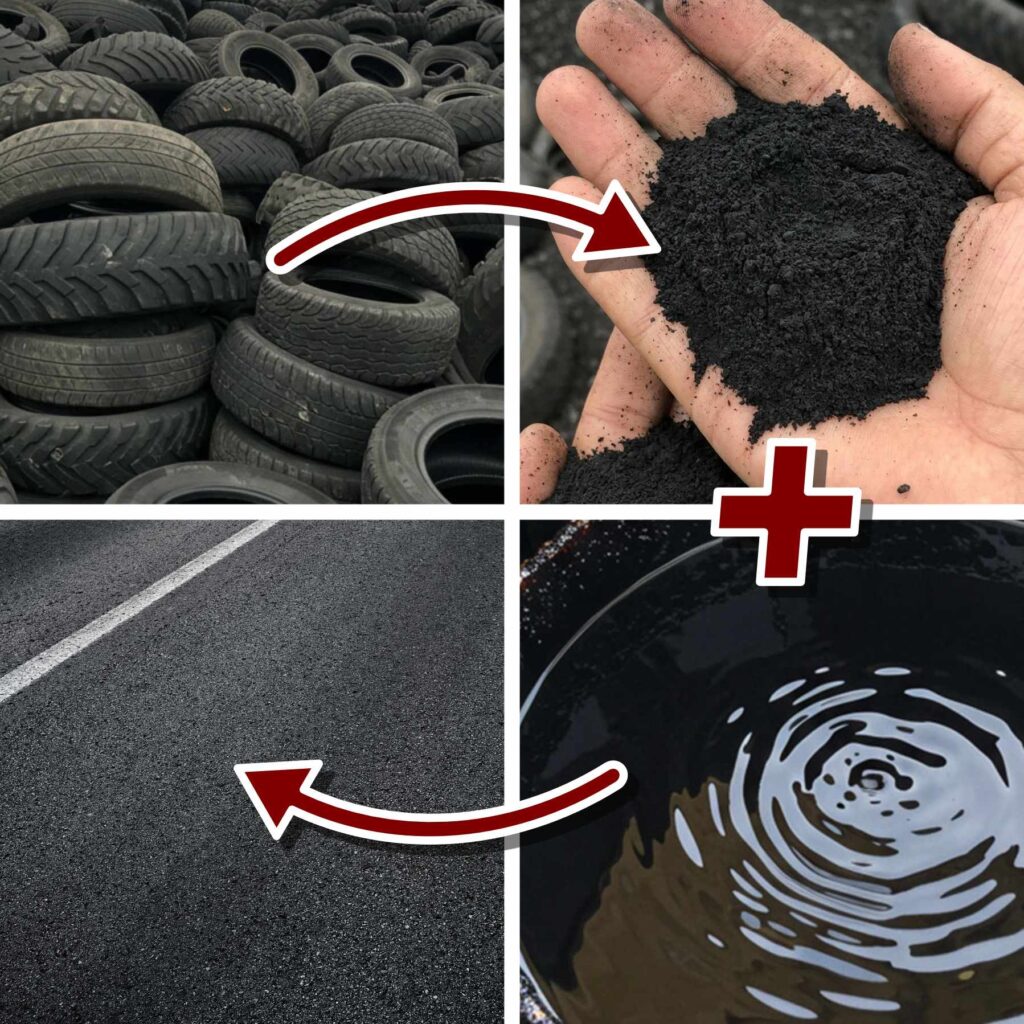
The CRMB solution effectively reclaims materials that would otherwise become pollutants. By processing used heavy vehicle tyres, we take these materials and blend them into the bitumen matrix. This process ensures that 100% of the local content from the used tires is reintroduced directly into the bitumen, creating a durable, high-quality product that reduces environmental impact while enhancing material performance.
Utilising 100% locally sourced recycled tyre rubber, CRMB serves as a sustainable binder modification technology that, when combined with bitumen and aggregates, produces CRMA, a durable and environmentally responsible pavement material.
ACCREDITATION & CERTIFICATION
The K2B Solution
Engineering & Environmental Benefits
Our innovative solution transforms used tires into high-performance Crumb Rubber Modified Asphalt, creating durable roads and a sustainable future
Five Reasons Engineers Specify CRMA
Here is why engineers specify CRMA as the solution:
CRMA turns waste tyres into long-lasting green roads.
Every tonne of CRMA laid removes end-of-life tyres from landfill.
Tyres are locked into decades of durable road service.
The circular economy loop is closed - certified and verified.
Proven at scale: 350,000+ m3 of CRMA placed since 2019.
CRMA pavement extends road lifespan and reduces resurfacing frequency.
Li, H., Chen, J., & Xiao, F. (2025). Recent advances in crumb rubber modified asphalt technology: A comprehensive review. Journal of Cleaner Production
CRMA resists deformation under heavy vehicle loads, as verified by Hamburg wheel-track testing.
Li, H., Chen, J., & Xiao, F. (2025). Recent advances in crumb rubber modified asphalt technology: A comprehensive review. Journal of Cleaner Production
CRMA’s rubber particles improve moisture resistance by 2x compared to conventional pavement material AC14 and ACW20
Ghabchi, R., Singh, D., & Zaman, M. (2016). Laboratory evaluation of moisture susceptibility of rubberised asphalt mixtures. International Journal of Pavement Engineering, 17(8), 699-708.
CRMA pavement reduces traffic noise by 1-3 dB compared to conventional pavement, with noise reduction persisting after 8 months of heavy traffic. (Study Reference)
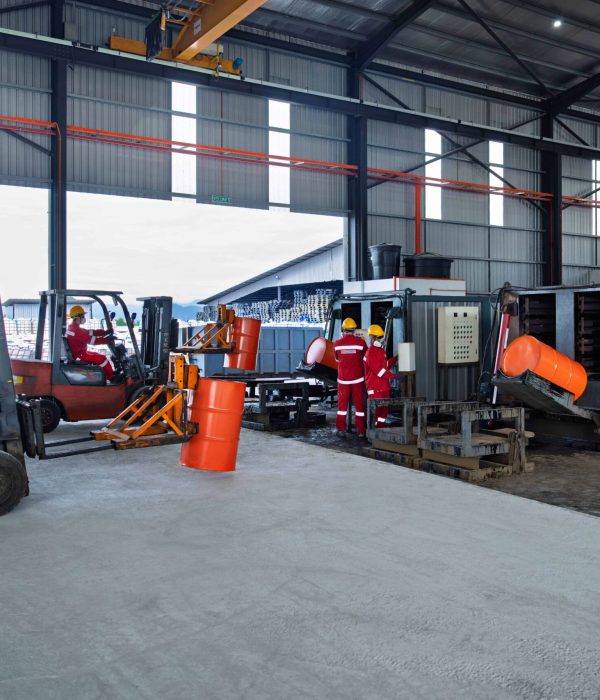
Collection & processing of end-of-life tyres into rubber powder.
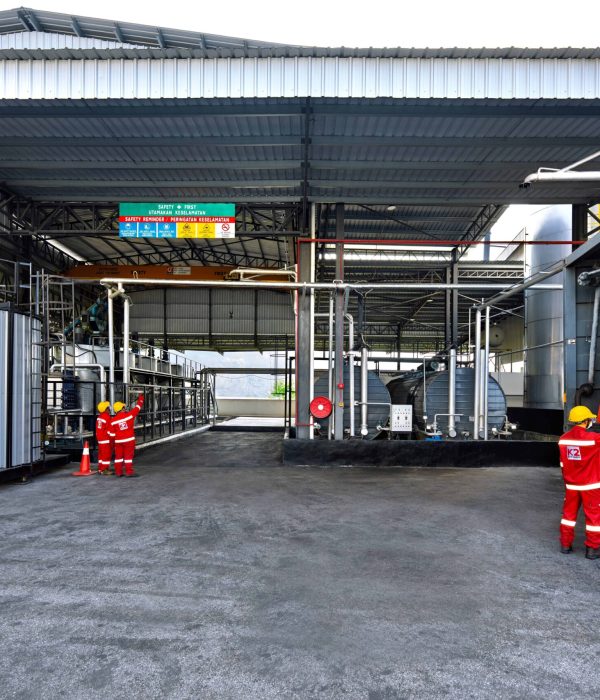
Compounding of rubber powder with high-grade bitumen.
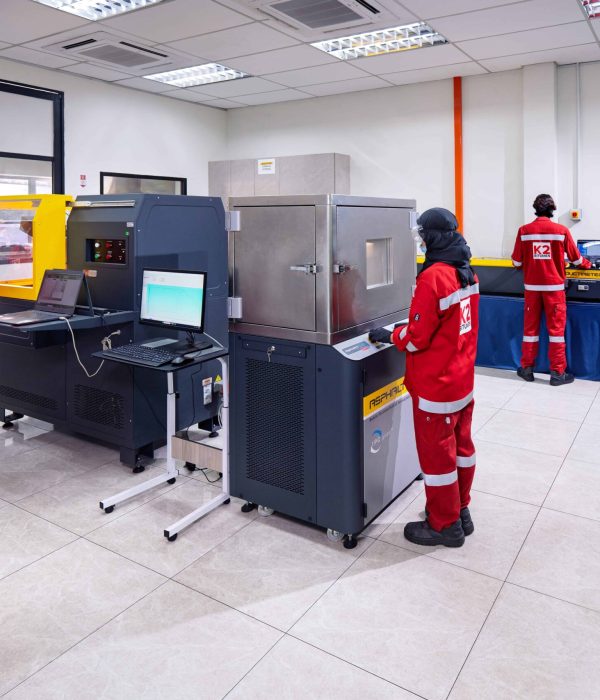
Laboratory qualification of each batch before dispatch.
Delivery in custom low-VOC temperature-controlled tankers.
VERIFIED BY LAB DATA
Laboratory Test Results
Independent lab testing confirms CRMA outperforms conventional asphalt across critical performance metrics — especially moisture resistance, the leading cause of premature pavement failure in tropical climates.
Tensile Strength Ratio (TSR) — Moisture Resistance
Higher is better. Minimum passing threshold: 80%.
92.6%
CRMA (K2B)
45.2%
AC14 (Conventional)
PASSES ✓FAILS ×
Source: K2 Bitumen Lab Report, 19 December 2023. CRMA’s TSR is 2.05× higher than conventional AC14 — meaning dramatically better resistance to water-induced stripping and pothole formation.
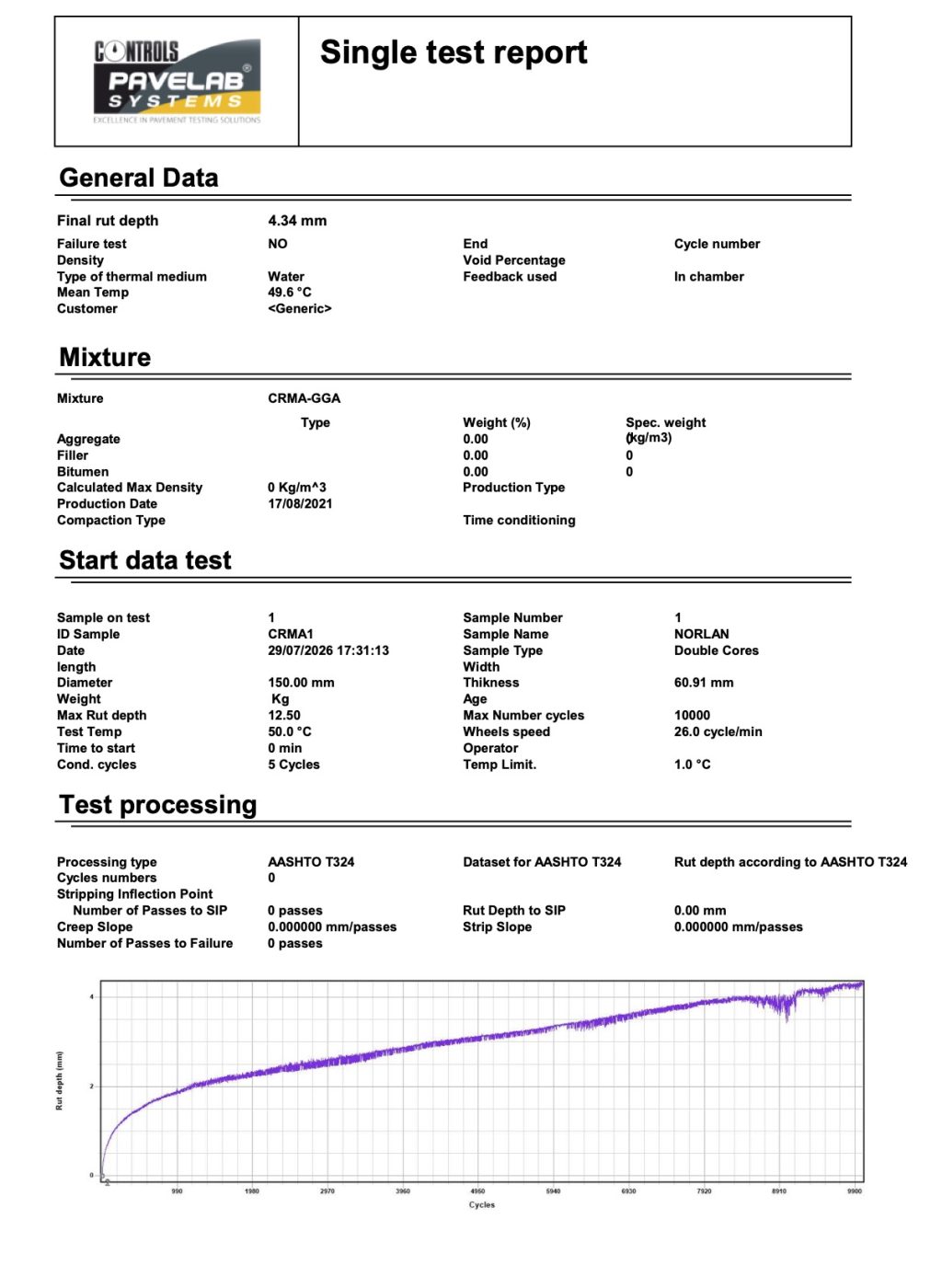
Hamburg Double Wheel-Tracking (Rutting Test)
CRMA (CR-GGA) After 10,000 Cycles4.28 mm
JKR Specification For CRMA (CR-GGA)max 12.5 mm
CRMA rutting performance conforms to JKR Specification requirement.
Semi-Circular Bend (Cracking Test)
CRMA (CR-GGA)0.586 kJ/m²
JKR Specification For CRMA (CR-GGA)0.5 kJ/m
CRMA shows lower post-peak crack propagation rate — meaning cracks spread more slowly once initiated.
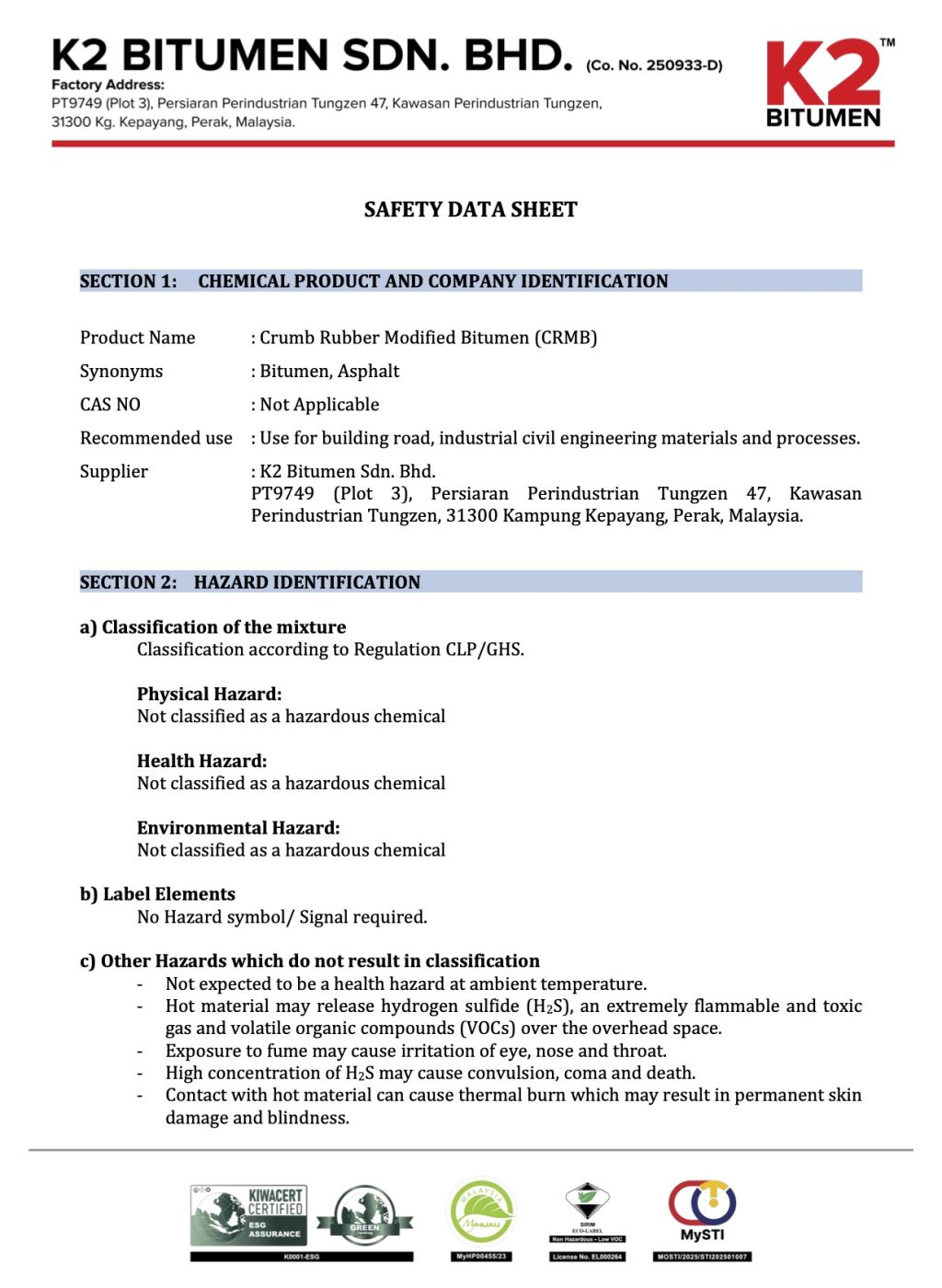
Certificates & Safety Data Sheets of CRMB
CRMB RMAL Approval
CRMB Safety Data Sheet
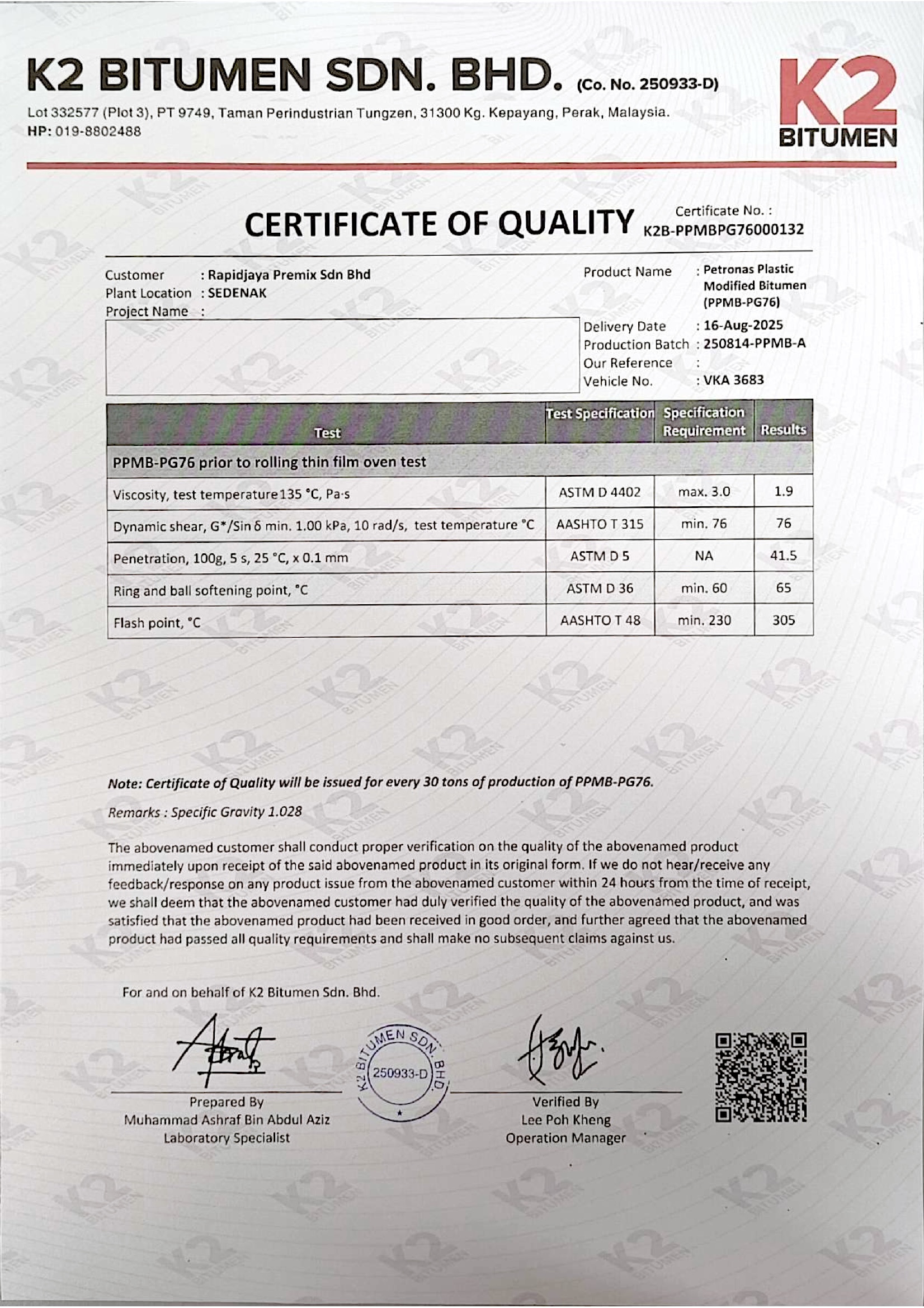
Certificate of Quality
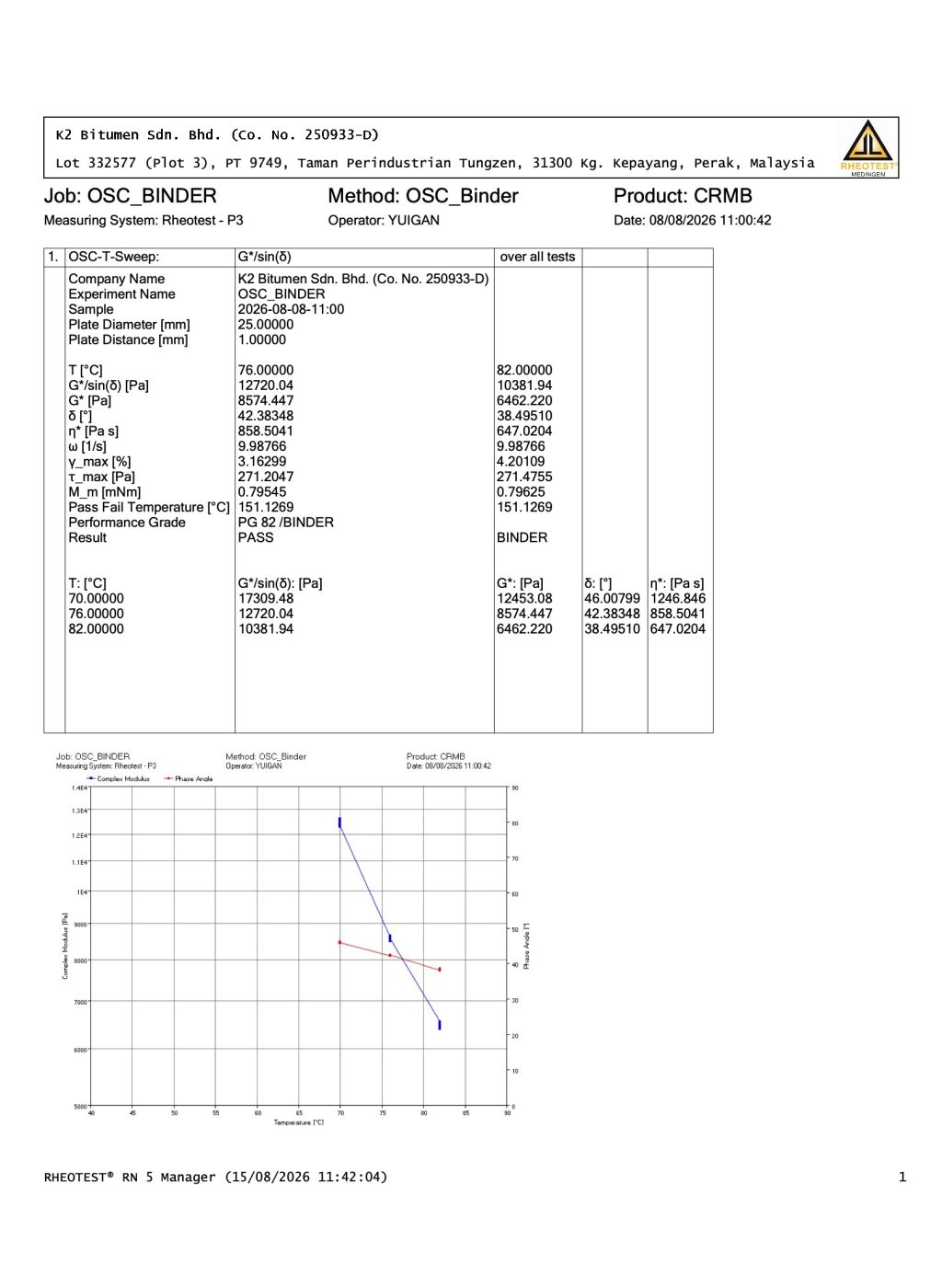
DSR Test Report
CRMA Test Report Samples
SCB Cracking Resistance Test
Norlan United Premix DWT S1
TSR & Marshall Report
FROM PROBLEM TO PRODUCT
The Tyre Problem Is Everyone's. This Is Our Answer.
Scrap tyres buried in landfills occupy enormous space and create cascading problems: trapped methane fosters mosquito and insect breeding, raising disease risk; leachate contaminates ground and surface water; and the soil bacteria essential to decomposition are destroyed. The gravest hazard is fire – once a large tyre stockpile ignites, it is nearly impossible to extinguish. Scrap tyre management should be regulated, monitored, and enforced, with penalties for non-compliance – while incentives for industry recycling remain scarce.